Santiago Quiotepec – Santa María Tecomavaca: Zapotec Ruins & Green Macaws, Oaxaca
A visit to the Tehuacan-Cuicatlan Biosphere and its green macaws
Ruta: Tehuacan-Cuicatlan
Some places in Mexico announce themselves with grandeur — soaring pyramids, colonial cathedrals, crowded plazas. Others reveal themselves slowly, in silence, through cactus forests and abandoned railway tracks and the memory of trains that no longer run. This Oaxaca hiking tour takes you deep into the Tehuacán-Cuicatlán Biosphere Reserve, a UNESCO World Heritage Site since 2018 and one of the most biodiverse desert landscapes in North America — and it ends, if you're patient and willing to rise before dawn, with the sight of an endangered green macaw soaring above a remote canyon few travelers ever see.
A UNESCO Biosphere Reserve Unlike Any Other
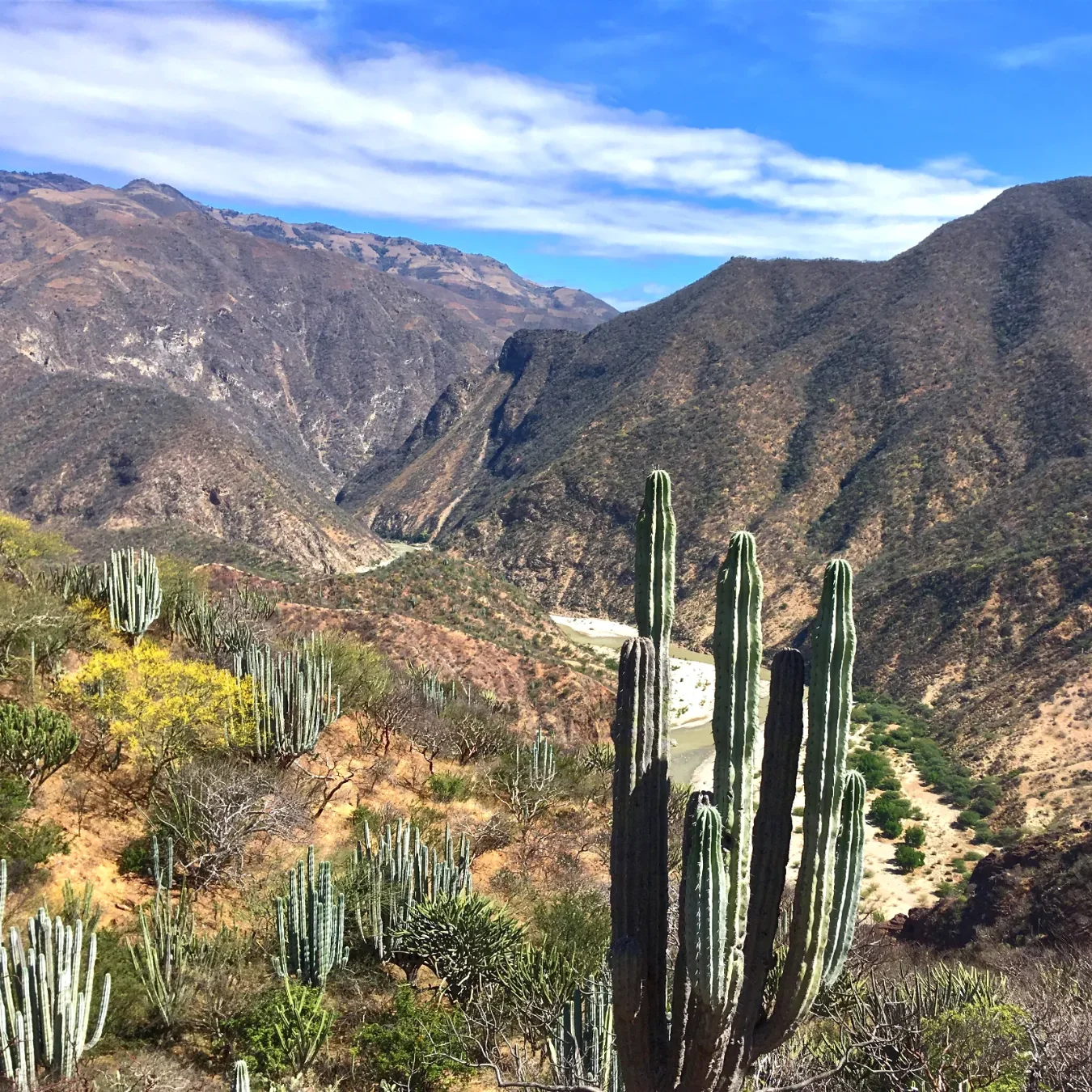
Stretching across the states of Puebla and Oaxaca, the Tehuacán-Cuicatlán Biosphere Reserve is a semi-arid ecosystem shaped by two mountain ranges that block incoming rain clouds, leaving behind a dry, sun-scorched terrain that somehow teems with life. This is one of the densest columnar cactus forests on Earth — dozens of cactus species rising across the valley floor alongside agaves, yuccas, and ancient oaks. Recognized by UNESCO as the "originary habitat of Mesoamerica," the reserve is home to over 350 recorded bird species, high levels of endemism, and one of the richest concentrations of threatened wildlife in Mexico — making it a bucket-list destination for birdwatching in Oaxaca, desert ecology, and biodiversity travel.
This is Oaxaca ecotourism at its most authentic: not a drive-through attraction, but a hiking and nature tour experienced on foot, at the pace of the land itself.
Santiago Quiotepec: A Historic Railway Village in Oaxaca
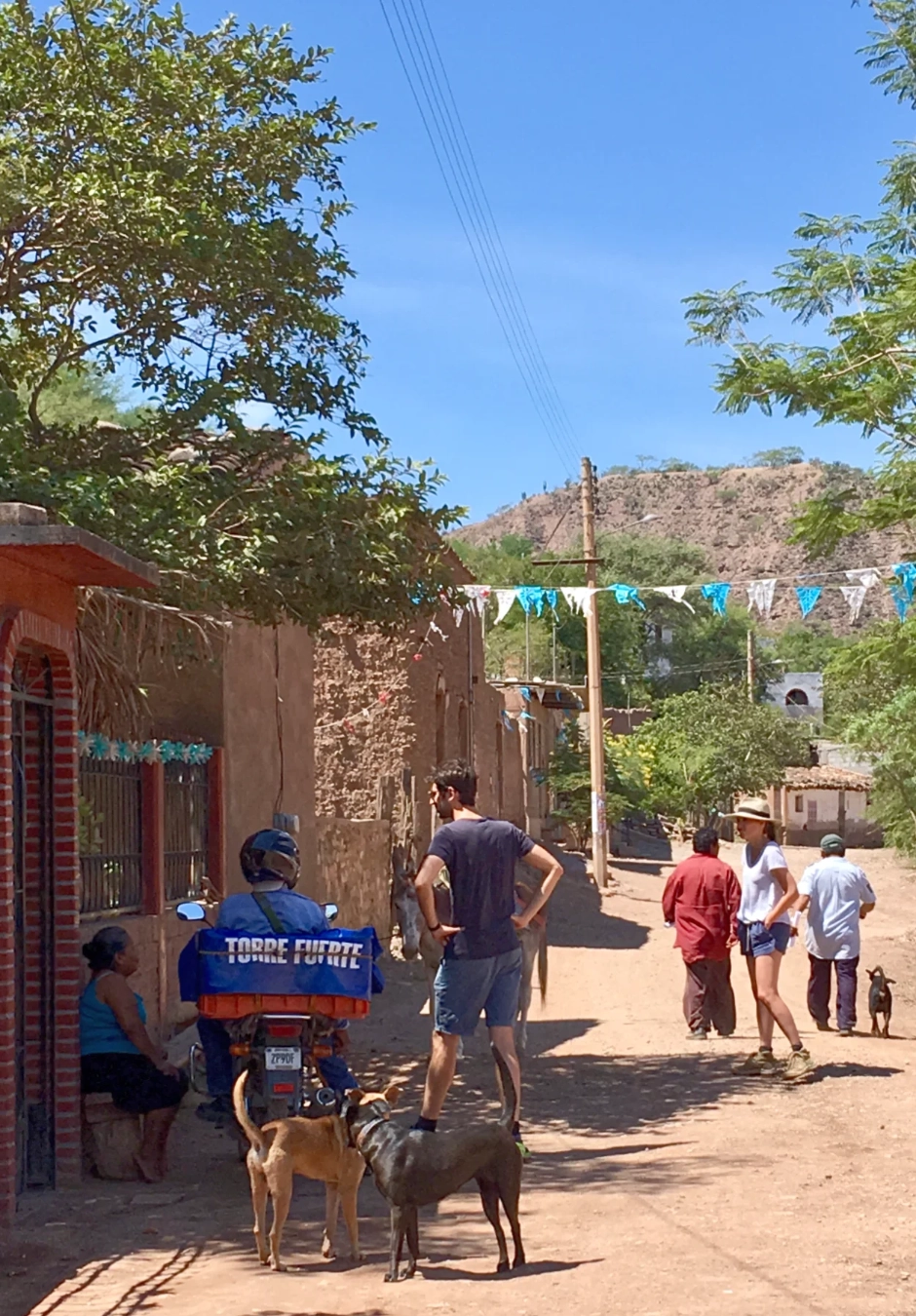
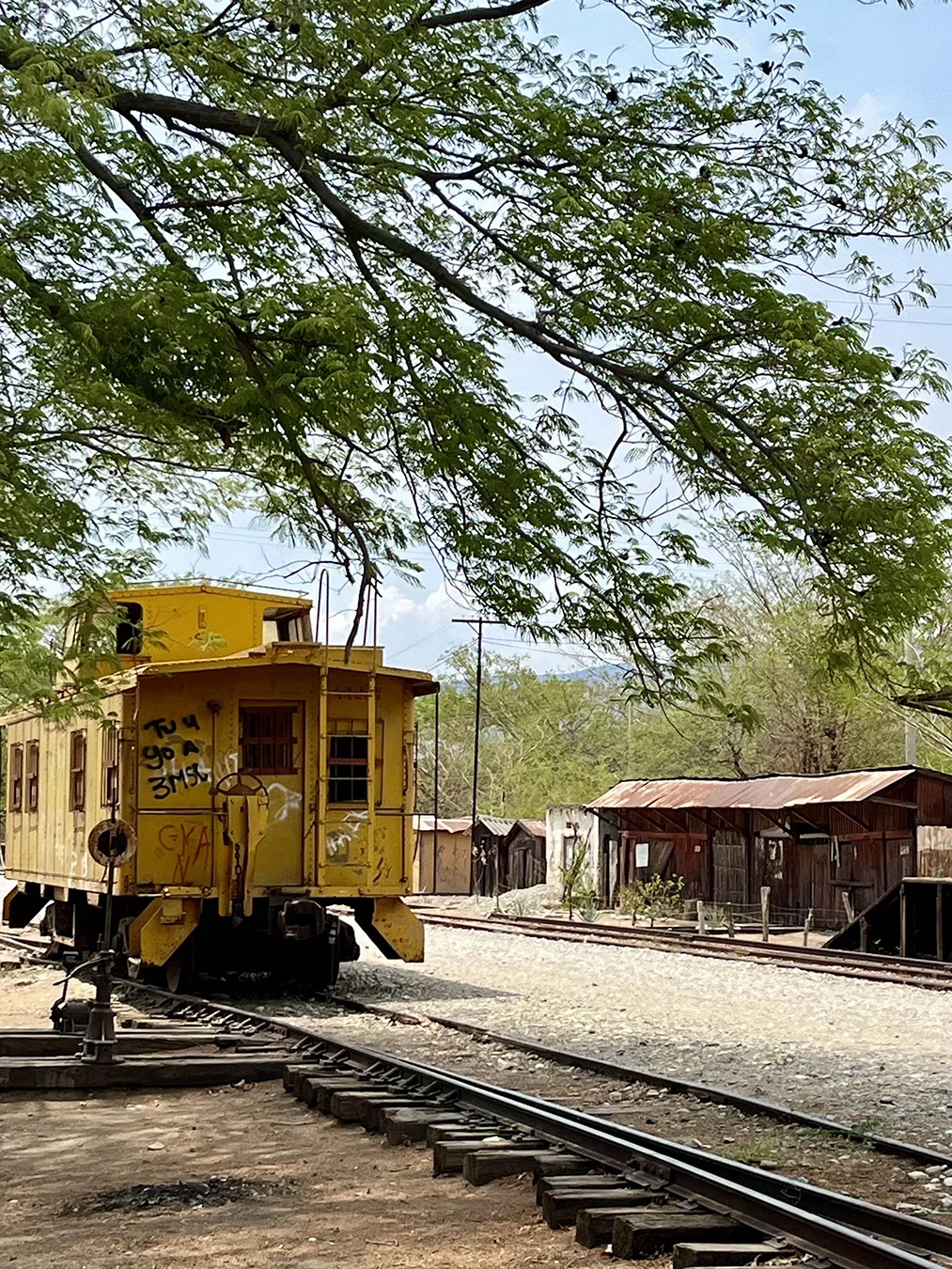
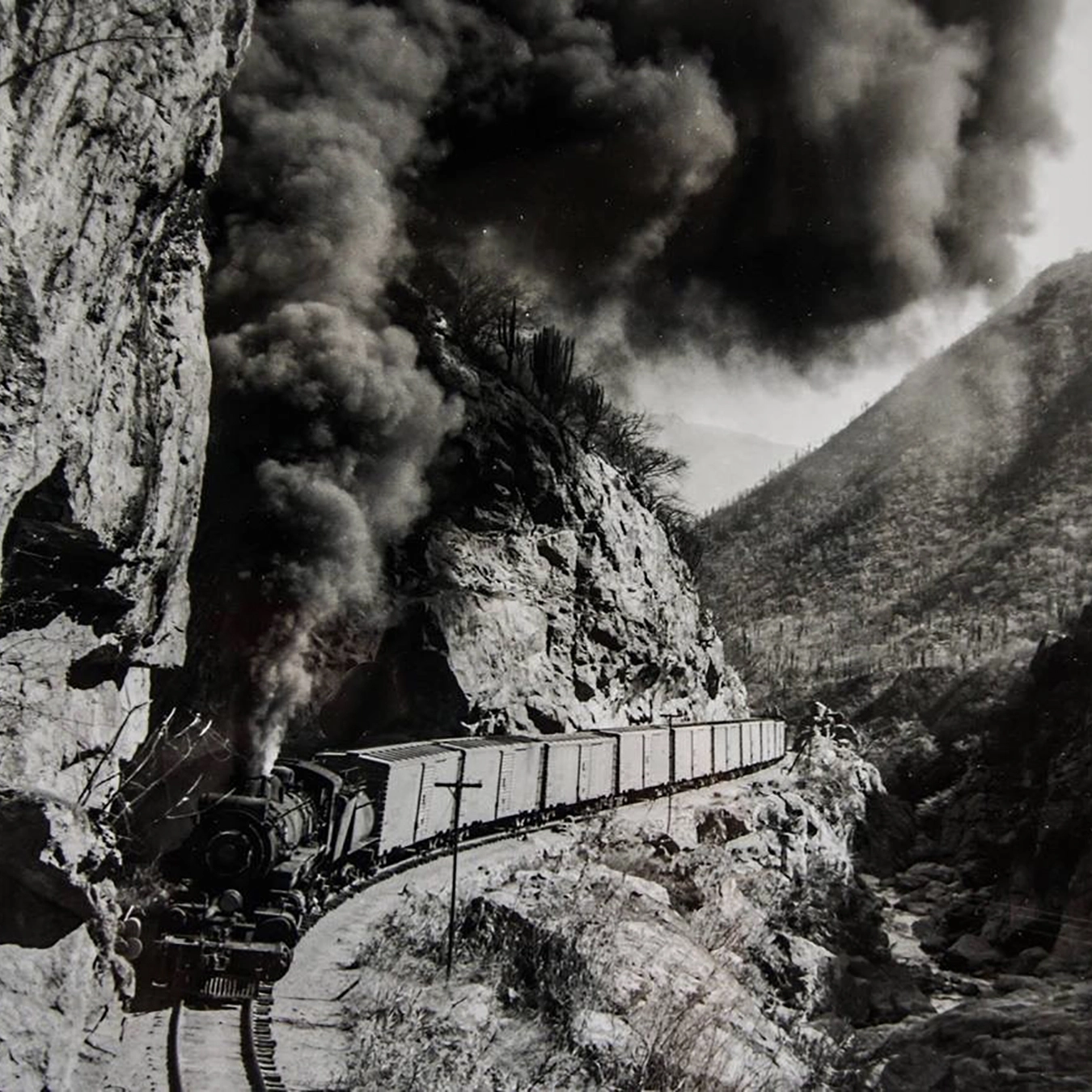
Our first stop is Santiago Quiotepec, a small village once connected to the rest of Mexico by railway. When the trains stopped running in 2000, the outside world quietly receded, leaving behind adobe houses, dusty streets, and a rhythm of rural life that feels suspended in time. For travelers seeking authentic rural Mexico, off-the-beaten-path Oaxaca villages, and a genuine glimpse of small-town life untouched by mass tourism, Quiotepec is a rare find.
Cerro Viejo: Zapotec Ruins and Ancient Archaeology
From Quiotepec, we hike to Cerro Viejo, an ancient Zapotec archaeological site that once marked the northernmost edge of the Zapotec empire. The site preserves a ball court, a temple, a pyramid, and tombs — a lesser-known counterpart to Monte Albán, ideal for travelers interested in Mexico archaeology tours, pre-Hispanic ruins, and Zapotec culture and history.
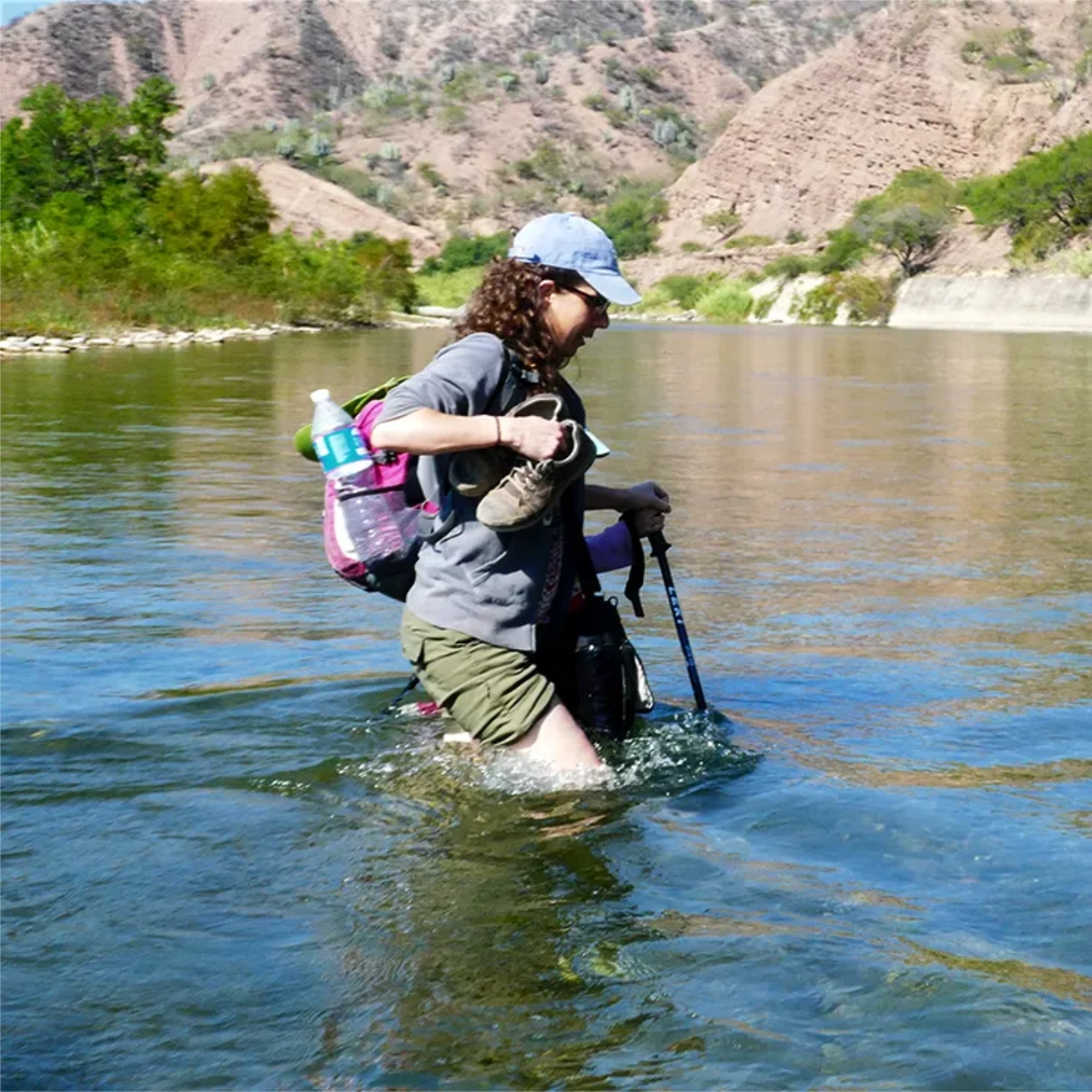
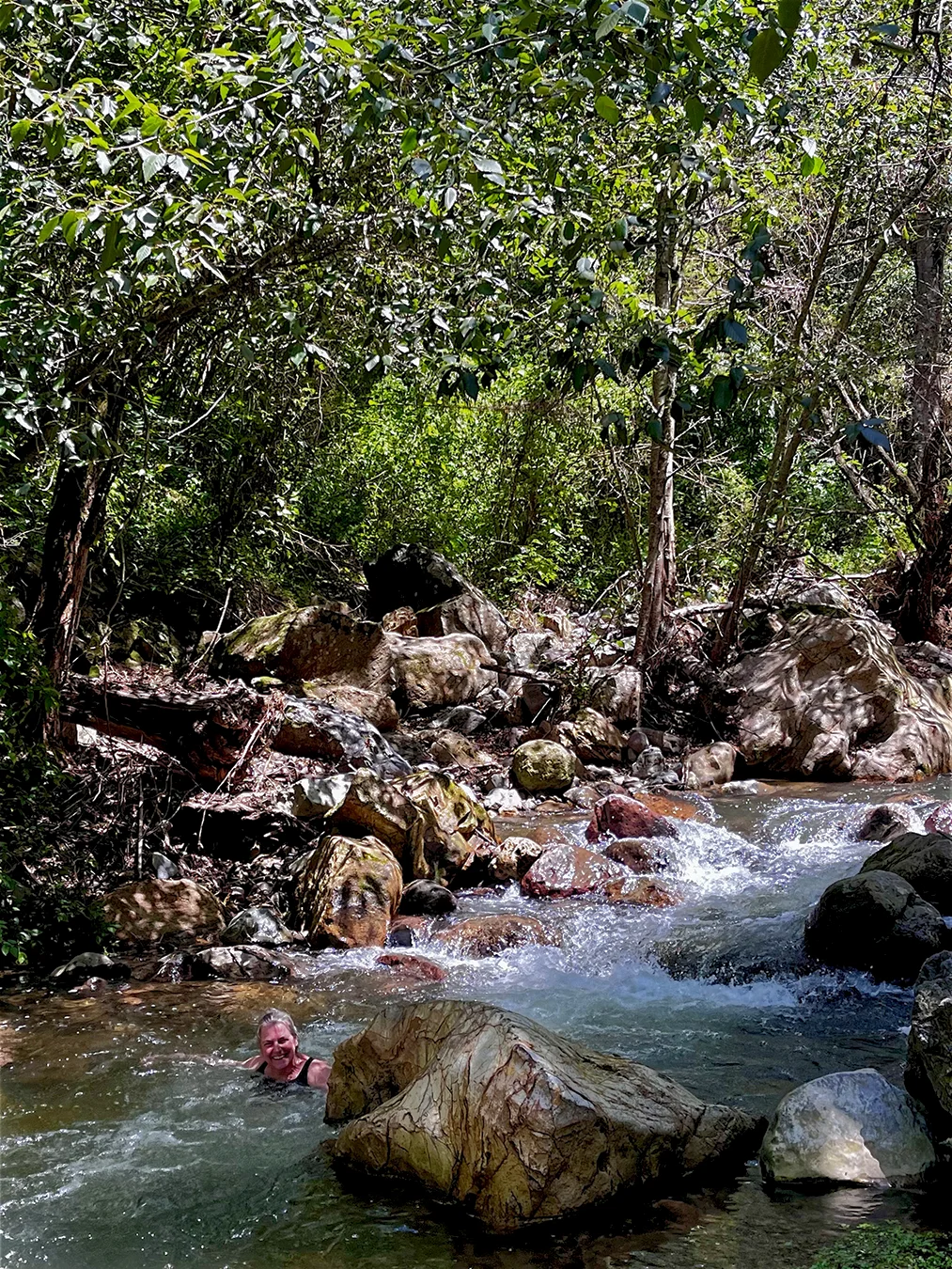
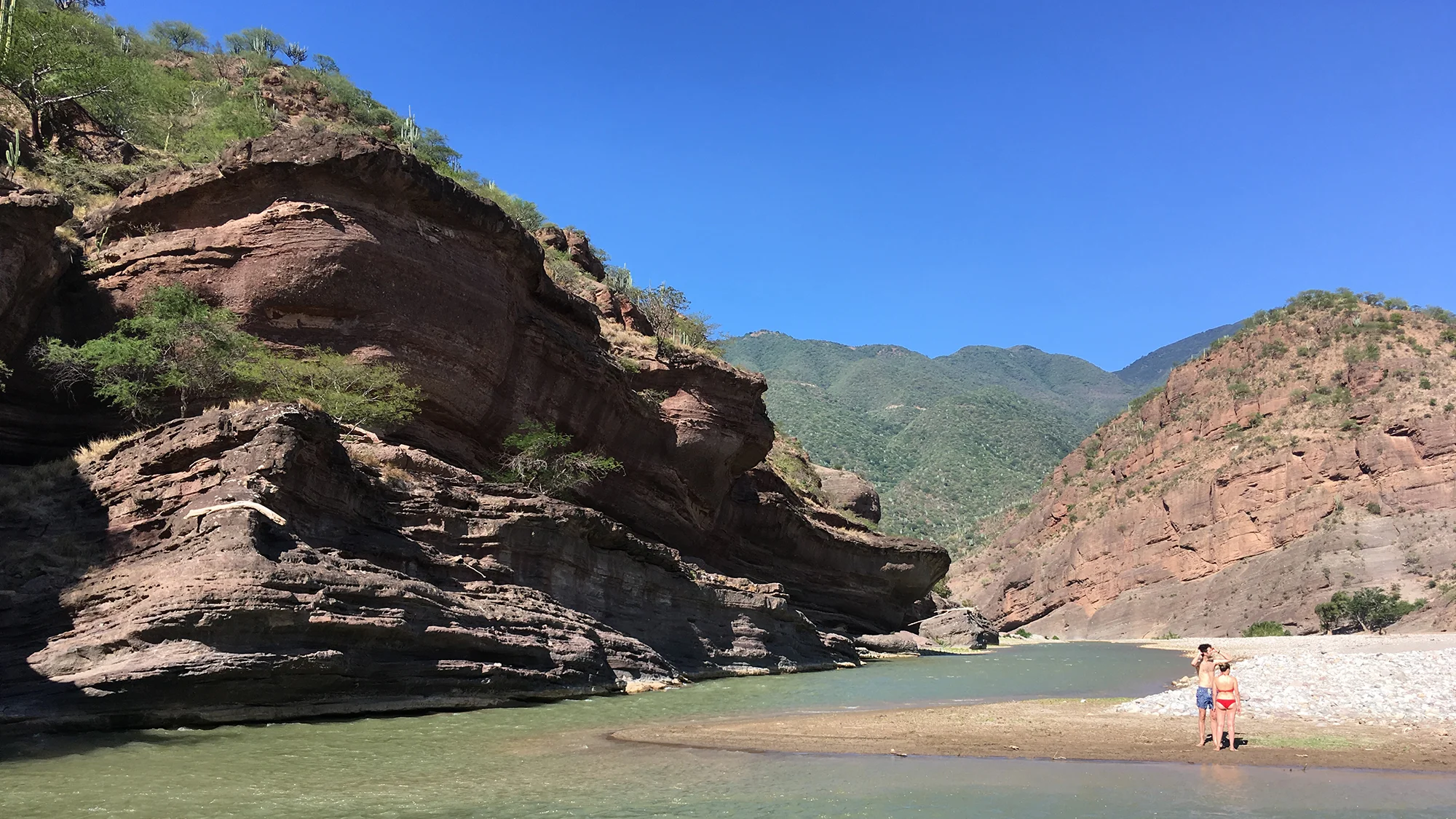
Afterward, we walk sections of the old abandoned railway line, tracing a route through red cliffs carved by the Salado and Tomellín Rivers — a scenic stretch popular for hiking trails in Oaxaca and photography. A refreshing river swim caps off the morning, a welcome break from the desert heat.
Cañón del Sabino: Green Macaw Birdwatching Tour
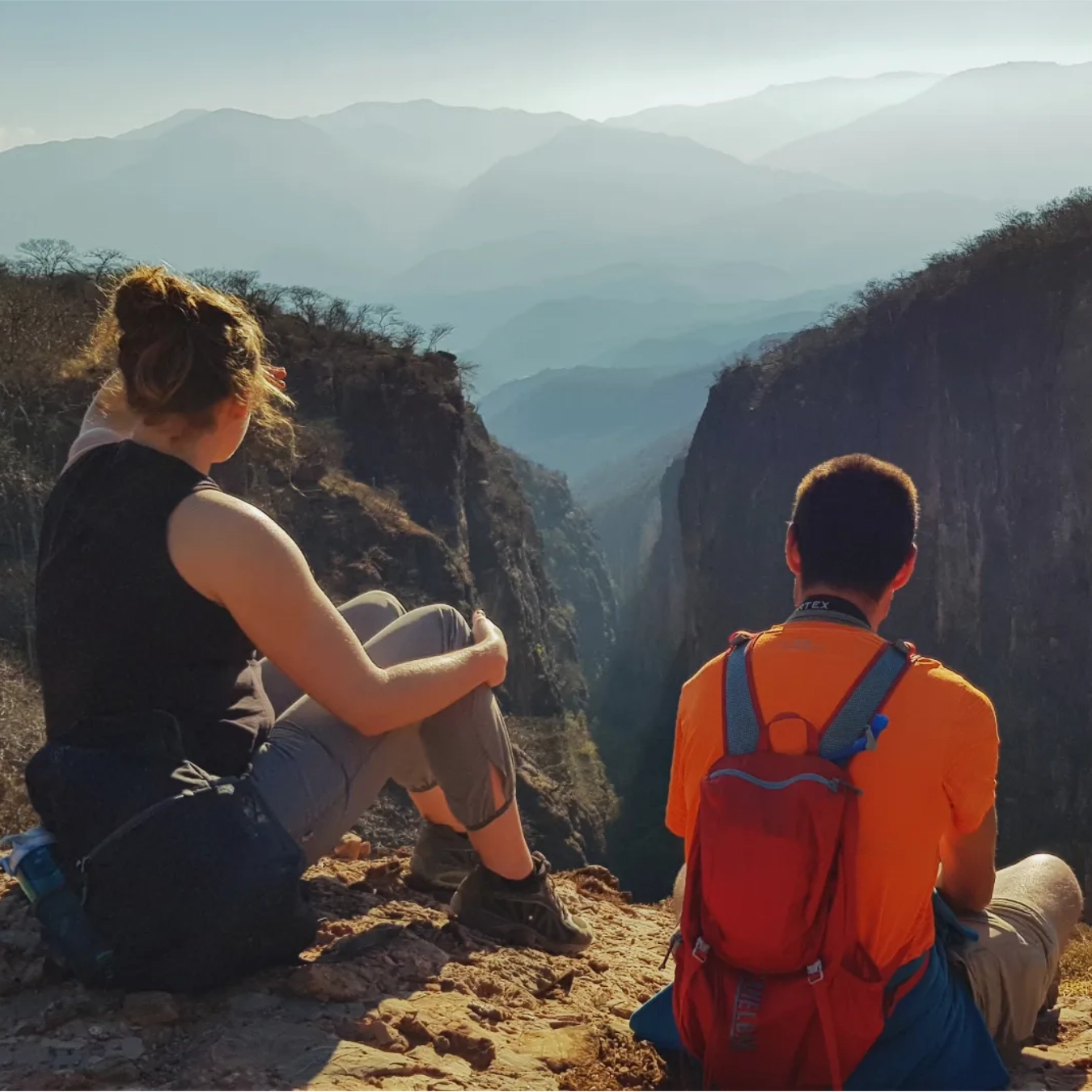
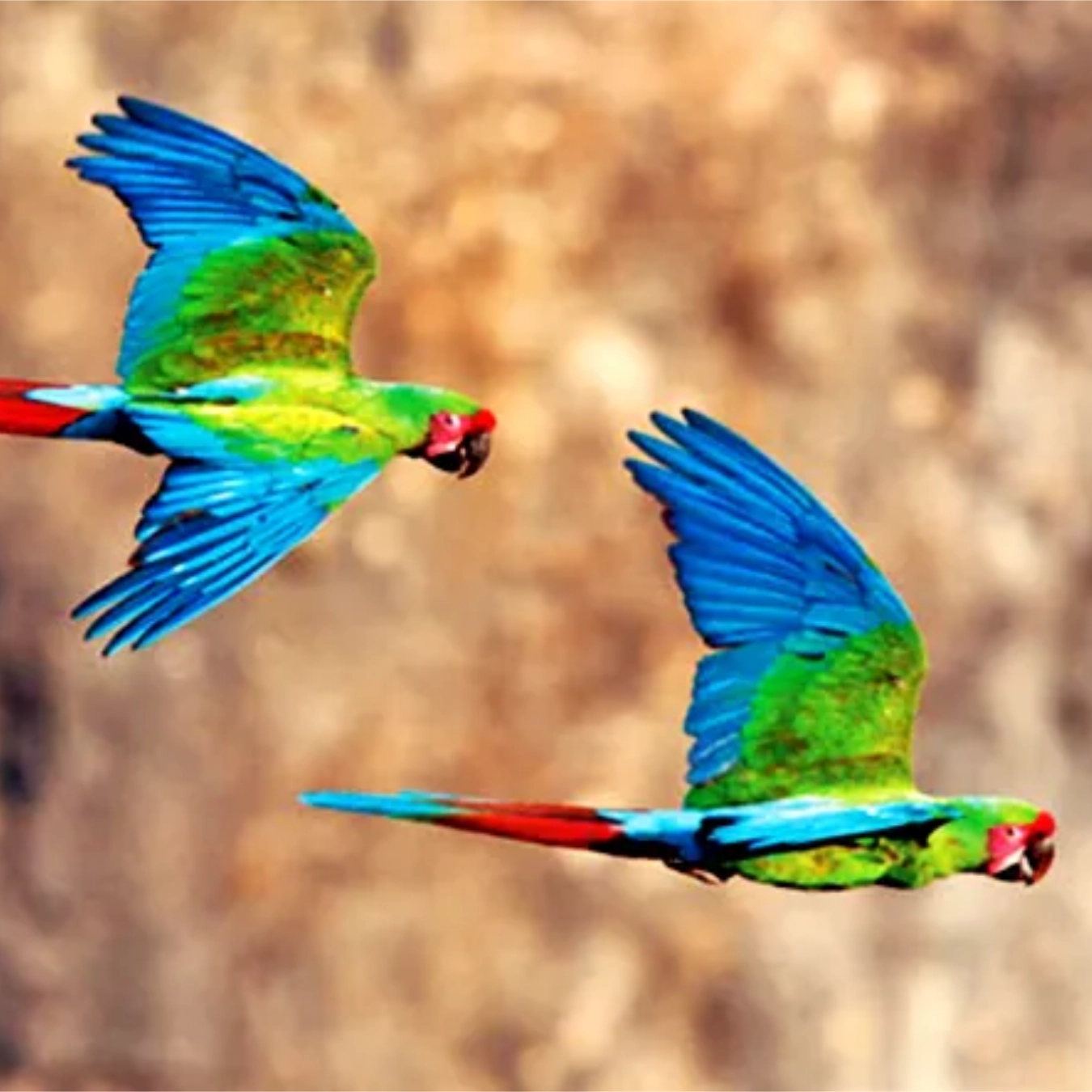
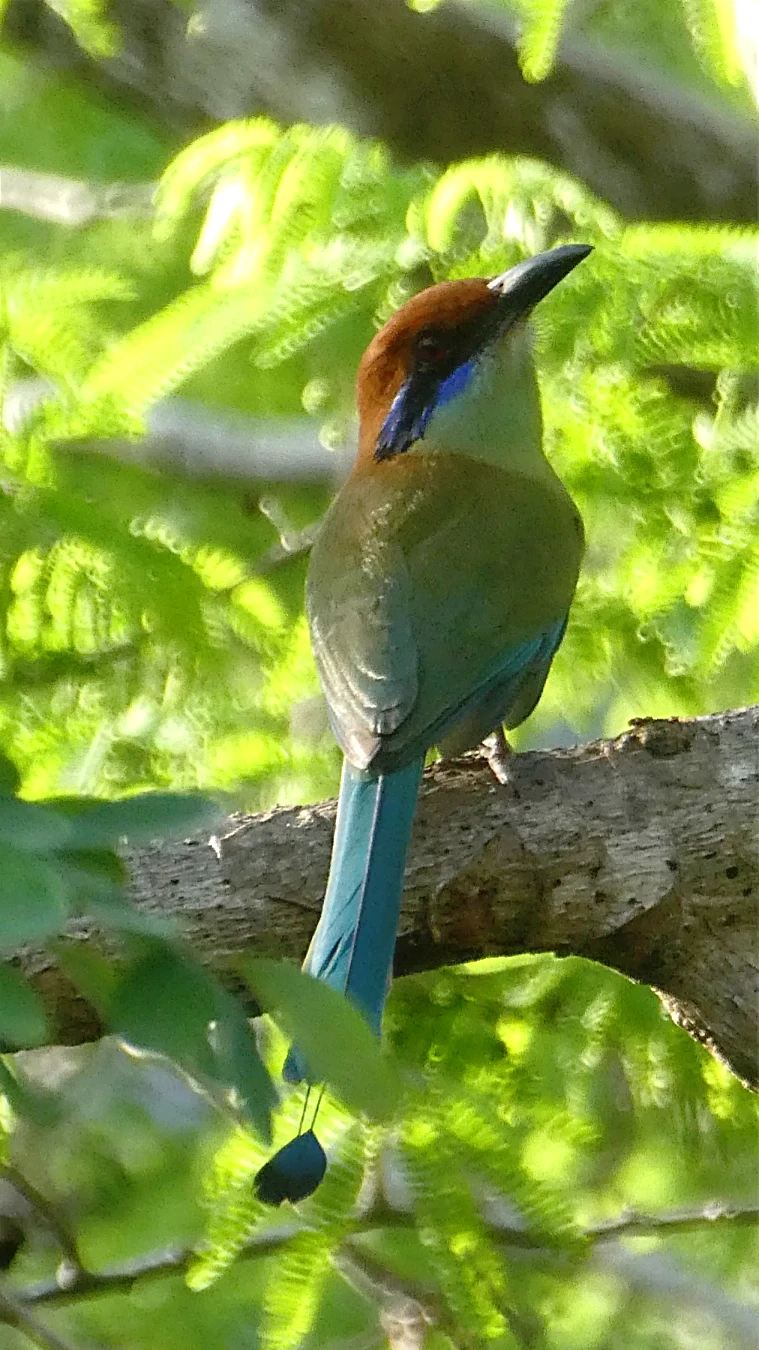
Day two begins before sunrise with a hike into the Cañón del Sabino, timed to catch the moment the green macaws (Ara militaris) become active at first light. This canyon is one of the last known nesting and roosting sites for this endangered species in Mexico, making it a top destination for wildlife photography, birdwatching tours Mexico, and conservation-focused travel. Sightings are most reliable between May and August during nesting season — the ideal window for anyone planning a green macaw watching trip or endangered species tour in Oaxaca.
Why Book This Oaxaca Adventure Tour
This multi-day Oaxaca hiking and wildlife tour combines archaeology, ecology, rural culture, and endangered species conservation in a single unforgettable route. It's ideal for travelers searching for Oaxaca eco-tours, sustainable travel Mexico, off-the-beaten-path Mexico destinations, Tehuacán-Cuicatlán tours, or a unique birdwatching and hiking vacation far from the usual tourist trail.
Discover the desert heart of Oaxaca — where Zapotec ruins, forgotten railways, and one of Mexico's rarest birds all meet in the Tehuacán-Cuicatlán Biosphere Reserve.
Gallery